
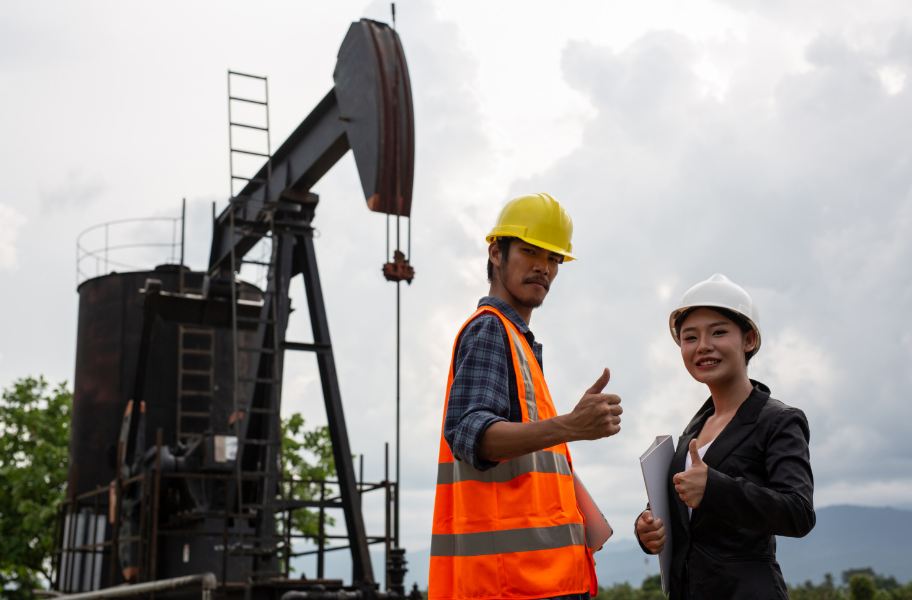
Digital technology plays a transformative role in the oil and gas industry, revolutionizing various aspects of engineering and operations. From enhancing efficiency and safety to enabling predictive maintenance and optimizing resource management, digital advancements are crucial for the industry’s evolution.
Here’s an in-depth look at the role of digital technology in oil and gas engineering.
1. Enhanced Data Analytics and Decision-Making
Digital technologies, particularly big data analytics, are vital in managing and interpreting the vast amounts of data generated by oil and gas operations. Advanced analytics can process data from sensors and monitoring equipment in realtime, providing engineers with insights into equipment performance, reservoir conditions, and production metrics.
This data-driven approach enhances decision-making, allowing for more precise and timely interventions, optimizing production, and reducing operational costs.
2. Predictive Maintenance and Asset Management
Predictive maintenance is one of the most significant benefits of digital technology in the oil and gas sector. Using machine learning and AI algorithms, companies can predict equipment failures before they occur. By looking into patterns and anomalies in data, predictive maintenance systems can alert engineers to potential issues, allowing for proactive maintenance. This will reduce downtime, extend the lifespan of equipment, and lowers maintenance costs—contributing to more efficient and reliable operations.
3. Digital Twins and Simulation
Digital twin technology creates virtual replicas of physical assets, such as drilling rigs, pipelines, and processing plants. These digital twins allow engineers to simulate and analyze the performance of assets under various conditions without physical testing.
By experimenting with different scenarios, engineers can optimize designs, improve safety, and enhance operational efficiency. Digital twins also facilitate remote monitoring and control, enabling real-time adjustments and reducing the need for on-site presence.
4. Automation and Robotics
Automation and robotics can take over repetitive and hazardous tasks. Automated drilling systems, for example, can operate with greater precision and consistency than human operators, improving drilling efficiency and reducing the risk of accidents.
These automated systems rely on heavy machinery like iron roughnecks to handle the physical connection of pipes on the drill floor. Because these machines operate under extreme pressure and harsh conditions, they require regular maintenance (using maintenance tracking technology) to remain safe and operational. Operators must schedule periodic inspections and complete rebuilds to meet industry standards. Getting an API iron roughneck recertification helps confirm that the equipment is fully restored to its original safety specifications. During this work, technicians disassemble the unit and inspect each part for wear before replacing any damaged components.
5. Internet of Things (IoT) Integration
IoT technology connects sensors, devices, and systems across oil and gas operations, enabling seamless data flow and communication. IoT devices monitor parameters such as pressure, temperature, and flow rates in real-time, providing engineers with a comprehensive view of operational conditions. For precise Oil and Gas pressure Control, advanced automation systems integrate sensor feeds with control algorithms and analytics to maintain safe operating limits and optimize production.
This connectivity enhances situational awareness, supports predictive analytics, and allows for more effective resource management. IoT integration also enables remote operations, reducing the need for on-site personnel and enhancing safety.
6. Workforce Training and Development
Virtual reality (VR) and augmented reality (AR) technologies are revolutionizing workforce training and development in the oil and gas sector. These technologies provide immersive training experiences, allowing employees to practice and develop skills in a safe, controlled environment.
VR and AR can simulate complex operations and emergency scenarios, enhancing the readiness and competence of the workforce. This is particularly valuable for training personnel for offshore and remote locations, where real-world training opportunities may be limited.
Companies have also developed to specialize in oil and gas engineering recruitment to find the right talent for the right positions, which can be partiularly challenging in the field.
7. Blockchain for Transparency and Security
Blockchain technology offers solutions for enhancing transparency and security in the oil and gas supply chain. By providing a decentralized and immutable ledger of transactions, blockchain ensures the authenticity and traceability of data. This is particularly useful for tracking the origin and movement of oil and gas, verifying the integrity of supply chains, and reducing fraud. Additionally, smart contracts facilitated by blockchain can automate and secure commercial transactions, improving efficiency and reducing administrative costs.
8. Enhanced Safety and Environmental Monitoring
Digital technology significantly enhances safety and environmental monitoring in the oil and gas industry. Advanced sensors and monitoring systems provide real-time data on environmental conditions, detecting leaks, spills, and emissions. This enables rapid response to incidents, mitigating environmental impact and ensuring regulatory compliance. Additionally, safety systems powered by AI can predict and prevent accidents by analyzing data from multiple sources and identifying potential hazards.
Conclusion
Digital technology is reshaping the oil and gas industry, driving improvements in efficiency, safety, and sustainability; and as the industry continues to evolve, the role of digital technology will only grow, offering new opportunities for innovation and optimization in oil and gas engineering.
