

Running a successful dental practice requires more than clinical excellence. You might be the most skilled practitioner in your city, capable of complex restorative work or flawless cosmetic procedures, but that skill means little if your appointment book remains empty.
For modern dental practices, the battle for new patients is largely fought on search engine results pages.
Search engine optimization is often viewed as a dark art by medical professionals—a confusing mix of algorithms, keywords, and technical jargon. However, Justin Morgan, widely known in the industry as the “Dental Marketing Guy,” approaches SEO differently.
He views it as a systematic, logical extension of practice management. It is not about tricking Google; it is about clearly communicating your relevance and authority to the search engine so it can connect you with the patients who need you most.
When executed correctly, SEO provides the highest return on investment of any digital marketing channel because it targets high-intent users. These are people actively seeking a solution to their tooth pain, an Invisalign provider, or a new family dentist.
Here are the top 10 dental search engine optimization strategies recommended by experts like Justin Morgan to help your practice climb the rankings and secure a steady stream of new patients.
1. Master Intent-Based Keyword Research
Many dentists make the mistake of guessing what potential patients are searching for on Google. They might optimize their site for “periodontist” when their neighbors are actually searching for “gum disease cure.” Effective SEO begins with understanding search intent.
There are generally two types of keywords you need to focus on:
- Informational Keywords: These are searches like “do root canals hurt” or “how much are braces.” These build trust and bring traffic to your blog.
- Transactional Keywords: These are the money-makers. Searches like “emergency dentist [City Name]” or “best cosmetic dentist near me” indicate the user is ready to book an appointment.
Justin Morgan emphasizes targeting “money keywords” with high commercial intent. Use tools like Ahrefs, SEMrush, or Google’s Keyword Planner to identify terms with decent search volume but, more importantly, high relevance to your specific services.
2. Claim and Optimize Your Google Business Profile
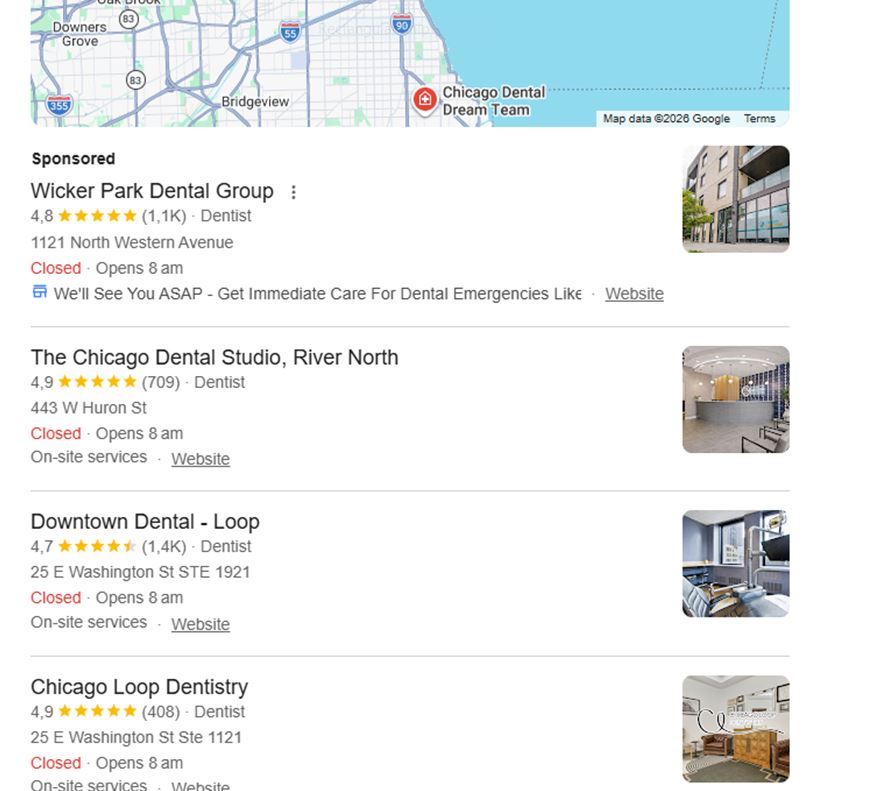
For a local business, your Google Business Profile (GBP) is arguably more important than your website’s homepage. This is the map listing that appears at the very top of the search results (the “Local Pack”).
To dominate this space, you must go beyond simply claiming the profile.
- Verification: Ensure your practice is verified to prevent unauthorized edits.
- Categories: Choose the primary category that best describes you (e.g., “Cosmetic Dentist” vs. general “Dentist”) and use secondary categories to cover other services.
- Photos: Regularly upload high-quality photos of your office, your team, and successful before-and-after cases. Real photos outperform stock photography significantly in conversion rates.
- Completeness: Complete all sections, including services, products, and Q&A.
3. Prioritize Technical Foundation and Site Speed
You cannot build a skyscraper on a swamp. Similarly, you cannot rank a website that is technically broken. Google’s “Core Web Vitals” update made user experience a ranking factor. If your site takes more than three seconds to load, potential patients will bounce back to the search results, signaling to Google that your site is not valuable.
Ensure your website is mobile-responsive. A vast majority of dental searches happen on smartphones, often during emergencies.
If users have to pinch and zoom to find your phone number, you have already lost them. Use tools like Google PageSpeed Insights to identify technical bottlenecks, such as large image files or bloated code that might be slowing you down.
4. Develop “YMYL” Content that Builds Trust
In Google’s view, dental websites fall under the “Your Money or Your Life” (YMYL) category. This means Google holds your content to a higher standard of accuracy because misinformation could harm a user’s health.
To rank well, your content must demonstrate E-E-A-T: Experience, Expertise, Authoritativeness, and Trustworthiness.
- Author Bios: Every blog post should be attributed to a qualified dentist, not “Admin.”
- Comprehensive Guides: Instead of thin 300-word posts, create detailed resources. For example, a “Complete Guide to Dental Implants” that covers procedure steps, recovery time, costs, and risks outperforms generic content.
- Originality: Avoid canned content provided by generic marketing agencies. If 500 other dentists have the exact same blog post about flossing, Google has no reason to rank yours.
5. Local Citations and NAP Consistency
Citations are mentions of your practice’s name, address, and phone number (NAP) on other websites. These usually appear in business directories such as Yelp, Healthgrades, Yellow Pages, and local chamber of commerce sites.
The critical strategy here is consistency. If your website lists your address as “123 Main St, Suite B,” but your Yelp profile says “123 Main Street #B,” Google’s algorithm gets confused. It reduces your trust in your data accuracy, which can harm your rankings.
Audit your current citations. Resolve any discrepancies to ensure your NAP data is consistent across the entire digital ecosystem. This signals to search engines that your business is legitimate and located exactly where you say it is.
6. Acquire High-Quality Local Backlinks
Backlinks—links from other websites pointing to yours—are like votes of confidence. However, not all votes are equal. A link from a spammy directory is worthless, but a link from a respected local entity carries immense weight.
Justin Morgan often advises focusing on “hyper-local” link building.
- Sponsorships: Sponsor a local Little League team or a charity 5K run. These organizations often link to sponsors from their websites.
- Local News: If you host a newsworthy event, such as a free dental day for veterans, local news outlets may cover it and link to your site.
- Professional Associations: Ensure you are listed on the websites of the ADA, your state dental association, and any specialized academies (such as the AACD) to which you belong.
7. Generate and Manage Patient Reviews
Reviews are a direct ranking factor for local SEO. They also serve as powerful social proof. A practice with 150 5-star reviews will almost always have a higher click-through rate than a competitor with 10 reviews, even if the competitor is ranked one spot higher.
You must have a proactive strategy for generating reviews. Do not leave it to chance. Implement software that sends automated text messages or emails to patients after their appointments to request feedback.
Furthermore, respond to every review. Thank patients for their praise. If you receive a negative review, respond professionally and in compliance with HIPAA. This shows prospective patients—and Google—that you are engaged and care about patient satisfaction.
8. Optimize On-Page Elements
This is the “nuts and bolts” of SEO. Every page on your site must be properly labeled for search engines.
- Title Tags: This is the blue link that appears in Google search results. It should include your primary keyword and your city. Example: Invisalign in Seattle, WA | Dr. Smith Orthodontics.
- Meta Descriptions: This is the short paragraph under the title. It doesn’t directly affect rankings, but a compelling description increases your Click-Through Rate (CTR).
- Header Tags (H1, H2, H3): Structure your content logically. Your H1 should be the page’s main topic, with H2s breaking down subtopics. This helps Google parse your content effectively.
9. Leverage Video Marketing
YouTube is the second-largest search engine in the world. Video content is exceptionally good at building the “Know, Like, and Trust” factor before a patient ever walks through your door.
Create short, educational videos answering common patient questions. Embed these videos on your website’s service pages.
- “What to expect during a root canal”
- “Meet Dr. Smith: Why I became a dentist”
- “Office Tour”
Videos increase “dwell time” (how long a user stays on your site), which is a positive signal to Google that your page provides value.
10. Implement Tracking and Analytics
You cannot improve what you do not measure. One of the biggest pitfalls in dental marketing is spending money without knowing what is working.
Install Google Analytics 4 (GA4) and Google Search Console. But go a step further: set up Call Tracking. This allows you to see exactly how many phone calls are generated by organic search versus paid ads or social media.
By analyzing this data, you can see which pages are converting visitors into patients and which pages have high bounce rates. If your “Teeth Whitening” page gets traffic but no calls, you know you need to improve the offer or the call-to-action on that specific page.
Frequently Asked Questions About Dental SEO
How long does it take to see results from Dental SEO?
SEO is a marathon, not a sprint. While some technical fixes can yield quick wins, significant movement in competitive markets typically takes 6 to 12 months. However, the results are compounding and long-lasting, unlike paid ads which stop the moment you stop paying.
Can I do SEO myself, or do I need an agency?
You can handle the basics—such as claiming your Google Business Profile and requesting reviews—yourself. However, technical SEO, link building, and comprehensive content strategy are time-consuming and require specialized knowledge.
Most dentists achieve a higher ROI by delegating this to experts, allowing them to focus on chairside production.
Why is my competitor ranking higher than I am?
There are hundreds of ranking factors. Your competitor might have an older domain age, more high-quality backlinks, a faster website, or more consistent reviews. An SEO audit can reveal the specific gap between your site and theirs.
Next Steps for Your Practice
Implementing these strategies requires consistency and patience. Start by auditing your current digital presence. Is your Google Business Profile fully optimized? Is your website mobile-friendly? Are you actively asking for reviews?
If you tackle these 10 strategies systematically, you will build a digital asset that drives new patient growth for years to come. SEO is not just about rankings; it is about positioning your practice as the clear, trustworthy choice in your community.
