
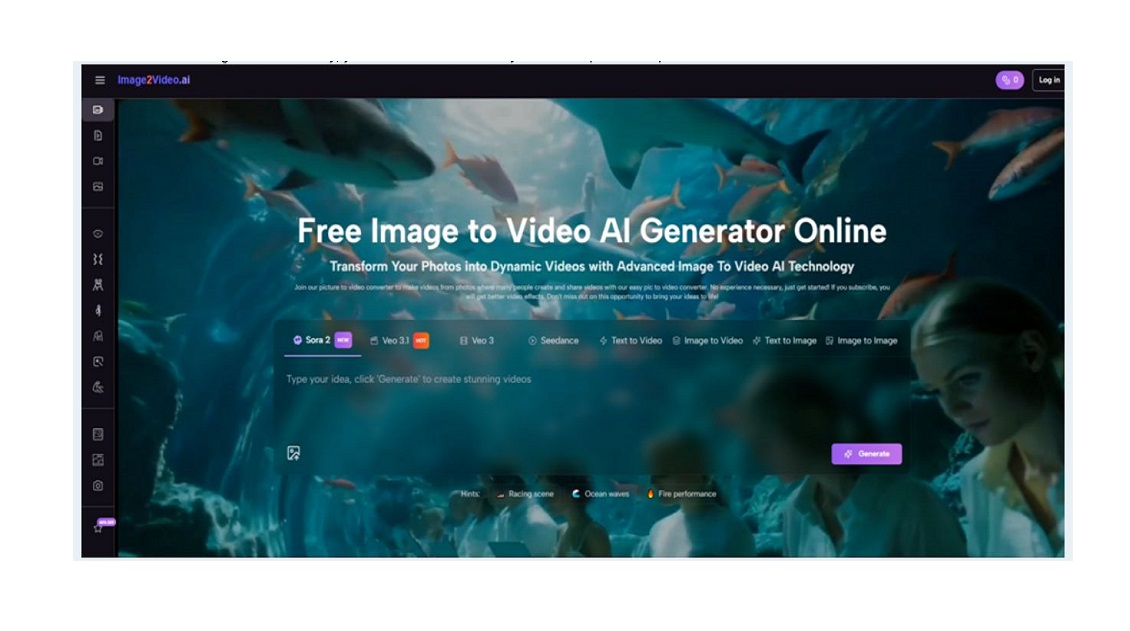
There is a quiet frustration in visual creation that rarely gets discussed. You can imagine a moving scene clearly in your head, but translating it into a finished video often requires tools that feel disconnected from that original idea. What I noticed when trying Image to Video AI is that the process removes that translation step almost entirely.
Instead of constructing motion manually, you describe it—and the system attempts to interpret.
Why Editing Is No Longer The Default Starting Point
The assumption that video must begin in an editor is slowly changing.
Creation Is Becoming Descriptive
Rather than building:
- timelines
- layers
- transitions
you describe:
- motion
- atmosphere
- intent
This changes both speed and accessibility.
The Cost Of Precision Tools
Traditional tools offer precision, but:
- require time investment
- require learning
- slow down iteration
For early ideas, that cost can be unnecessary.
How Motion Emerges From A Single Frame
The process is not animation in the traditional sense.
From Static Composition To Dynamic Interpretation
The Image Defines Boundaries
The uploaded image determines:
- subject position
- perspective
- visual balance
The system does not rebuild the scene—it evolves it.
Prompt As Behavioral Guide
The prompt influences:
- how elements move
- how the camera behaves
- how lighting feels
It acts more like direction than instruction.
Model Choice Shapes Output Style
Different models appear to influence:
- realism vs stylization
- motion fluidity
- consistency
This is noticeable even without exposed technical controls.
Actual Workflow Without Hidden Complexity
The process follows a straightforward structure.
Three Core Steps In Practice
Step 1 Provide Source Image
Upload a photo to define the base visual context.
Step 2 Describe Desired Motion
Add a prompt that explains movement, tone, and style.
Step 3 Generate Final Video
Wait for processing, then review and download the output.
There is no intermediate editing layer.
Comparing Two Creative Approaches
| Dimension | AI Generation Flow | Manual Editing Flow |
| Speed | High | Low |
| Control Detail | Medium | High |
| Skill Requirement | Low | High |
| Iteration Ease | High | Low |
| Output Consistency | Variable | Stable |
Each approach has a place depending on the goal.
Where This Method Feels Most Effective
Rapid Concept Testing
When exploring multiple directions, speed matters more than precision.
Short Form Content Creation
For social media, emotional impact often outweighs technical perfection.
Visual Story Prototyping
Early-stage storytelling benefits from quick visual drafts.
Observed Constraints And Tradeoffs
Dependence On Prompt Clarity
Ambiguous descriptions often produce less satisfying results.
Occasional Motion Artifacts
In some cases, movement can feel slightly unnatural.
Need For Multiple Attempts
Refinement often comes through repetition.
These are expected behaviors in generative systems.
How Photo To Video Reflects A Larger Shift
The concept of Photo to Video is not just a feature. It represents a broader shift in how content is created.
Instead of building motion step by step, the system infers motion from intent.
This reduces friction but also introduces variability.
A New Kind Of Creative Workflow
From Execution To Direction
The creator becomes:
- a director of intent
- a designer of prompts
rather than an editor of frames.
From Precision To Exploration
The focus shifts toward:
- trying ideas quickly
- iterating freely
- refining direction
Why This Matters Now
The barrier to motion content is lowering.
That means:
- more creators entering the space
- faster cycles of experimentation
- new formats emerging
The tools themselves are not the most important part. The shift in how ideas are expressed is.
And that shift is already happening.
