
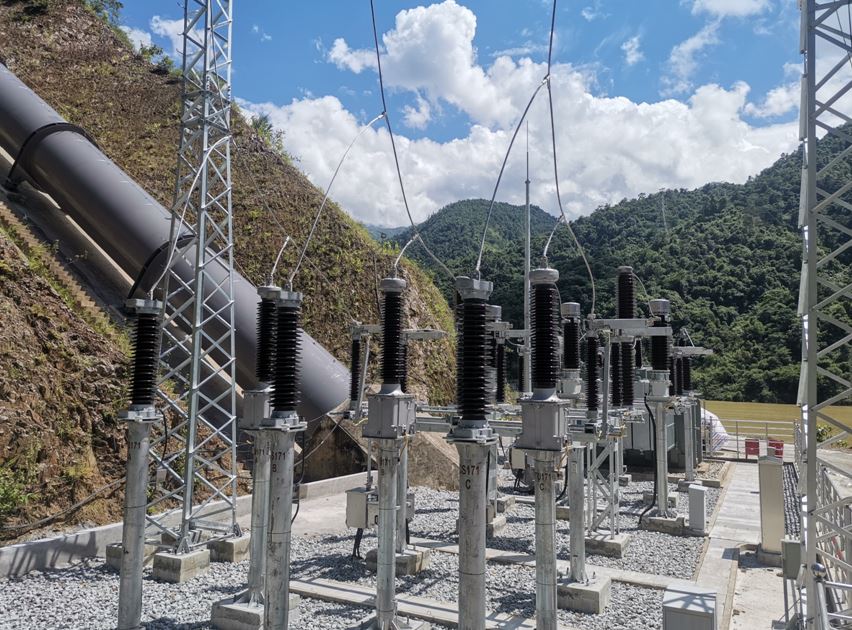
In modern electrical systems, measuring high currents directly is neither practical nor safe, yet accurate measurement is essential for energy billing, monitoring, and protection. This is made possible by a current transformer, which scales large currents down to safe, manageable levels without interrupting the circuit. Despite their widespread use, key specifications, especially ratios and accuracy classes, are often misunderstood.
If you have ever seen markings like “800:5” or accuracy classes such as “0.5” or “5P10” and felt unsure what they mean, you’re not alone. These values directly affect system reliability and measurement accuracy. Understanding them helps you read technical specifications with confidence and appreciate how precision and safety are maintained in electrical systems.
What Is a Current Transformer?
A current transformer is a type of instrument transformer designed to convert a high primary current into a lower secondary current that can be safely measured by meters, relays, or monitoring devices. The primary conductor carries the actual load current, while the secondary winding produces a proportional current that follows standardized values, typically 5 amperes or 1 ampere.
This indirect measurement approach protects sensitive instruments from high current levels and allows consistent measurement across a wide range of applications. Without current transformers, most modern power systems would not be able to monitor performance, detect faults, or bill energy usage accurately.
Why Current Transformers Are Essential in Power Systems
Current transformers connect high-power circuits to low-power measurement and control equipment. You rely on them for energy metering, load monitoring, and detecting abnormal conditions in protective systems. Because they operate continuously under changing loads, they must maintain safety, accuracy, and durability.
They also play a key role in protection by accurately sensing fault currents, allowing relays and circuit breakers to act quickly during overloads or short circuits to reduce equipment damage and safety risks.
Understanding Current Transformer Ratios
What a CT Ratio Represents
A current transformer ratio defines the relationship between primary and secondary current. For example, a 400:5 ratio means 400 amperes on the primary side produces 5 amperes at the secondary. This fixed ratio ensures consistent, predictable current scaling.
By using standardized secondary currents, the ratio allows the same measuring instruments to work across systems with different current levels. You can determine the actual primary current by multiplying the secondary reading by the ratio factor.
Why Ratio Selection Matters
Choosing the correct ratio directly impacts measurement accuracy. If the ratio is too high for normal operating current, the secondary signal becomes small and less accurate. If it is too low, the transformer may overheat or saturate during peak loads.
For best performance, the rated primary current should align closely with typical operating conditions rather than maximum possible current, allowing the current transformer to remain accurate most of the time.
How Ratios Influence Accuracy and Performance
Current transformers are most accurate near their rated primary current. When operating well below this level, ratio and phase errors increase, which can be significant in energy metering where small inaccuracies add up over time.
At very high currents, the transformer core may saturate, distorting the secondary signal and affecting both measurement and protective relay operation. Selecting the correct ratio helps balance accuracy during normal operation with reliable performance under high-current conditions.
What Are Accuracy Classes?
Accuracy classes define how closely the secondary current of a current transformer represents the true primary current under specified conditions. These classes are standardized and provide clear limits for allowable error, making it easier to compare and select devices for specific applications.
Accuracy is typically expressed as a number, such as 0.5 or 1, which corresponds to the maximum percentage error at rated current. Lower numbers indicate tighter accuracy requirements and are used where precision is critical.
Metering Accuracy Classes Explained
Metering accuracy classes are intended for normal operating conditions and focus on minimizing error in both magnitude and phase. Common classes include 0.1, 0.2, 0.5, 1, and 3, with each step representing a broader tolerance.
| Accuracy Class | Typical Application |
| 0.1 – 0.2 | High-precision measurement |
| 0.5 – 1 | General energy metering |
| 3 | Basic indication |
Choosing the appropriate class depends on how precise the measurements need to be and whether they are used for billing, monitoring, or simple indication.
Protection Accuracy Classes and Their Purpose
Protection accuracy classes differ from metering classes because they are designed to perform reliably during fault conditions rather than normal operation. These classes are expressed using designations such as 5P or 10P, followed by a number indicating the accuracy limit factor.
For example, a class marked 5P10 means the transformer will maintain its accuracy within 5% error up to ten times its rated current. This ensures that protective relays receive a usable signal even during severe overloads or short circuits.
Metering vs. Protection: Key Differences
Metering and protection current transformers serve different purposes, and their accuracy requirements reflect this distinction. Metering transformers prioritize precision at or near rated current, while protection transformers emphasize stability and linearity under extreme conditions.
In many installations, separate transformer cores are used for metering and protection to avoid compromise. This separation ensures that each function performs optimally without interference from the other.
Standards Governing Current Transformers
International standards provide the framework that defines how current transformers are designed, tested, and classified. One of the most widely used standards specifies accuracy limits, burden ratings, insulation levels, and thermal performance requirements.
Compliance with these standards ensures consistency and predictability, allowing engineers and technicians to select and apply current transformers with confidence across different systems and regions.
Burden and Its Effect on Accuracy
Burden refers to the total load connected to the secondary circuit of a current transformer and is typically expressed in volt-amperes. Every meter, relay, and length of wiring adds to this burden. If the total exceeds the rated value, accuracy degrades and heating increases.
Keeping the burden within specified limits is essential for maintaining performance. This often involves selecting low-impedance devices and minimizing unnecessary secondary wiring length.
Installation and Operating Considerations
Proper installation plays a major role in how well a current transformer performs. Secure connections, correct polarity, and appropriate mounting all contribute to reliable operation. One critical safety rule is never to leave the secondary circuit open while the transformer is energized, as this can produce dangerously high voltages.
Environmental factors such as temperature, frequency, and external magnetic fields can also influence accuracy. Understanding these influences helps explain why real-world performance may differ slightly from laboratory specifications.
Practical Applications in Everyday Systems
Current transformers are used throughout power systems, from residential metering panels to industrial switchgear and utility substations. In monitoring applications, they provide real-time data that supports load management and efficiency analysis, while in protection systems they enable rapid fault detection and isolation.
Equipment used in these environments, such as current transformers manufactured by CHINT, is designed to operate across a wide range of voltage levels and installation conditions while adhering to standardized performance requirements. Despite differences in form or application, the underlying principles of ratios and accuracy classes remain consistent, which is why current transformers are a foundational component of electrical engineering.
Conclusion
Understanding current transformer ratios and accuracy classes transforms technical labels into meaningful information. When you know how ratios scale current, how accuracy classes define acceptable error, and how operating conditions affect performance, you gain a clearer picture of how electrical systems maintain precision and safety.
Whether you are learning the basics, reviewing specifications, or simply seeking to be more informed, this knowledge helps you approach electrical measurement with confidence. A current transformer may operate quietly in the background, but its role is central to reliable, measurable, and protected power systems worldwide.
