
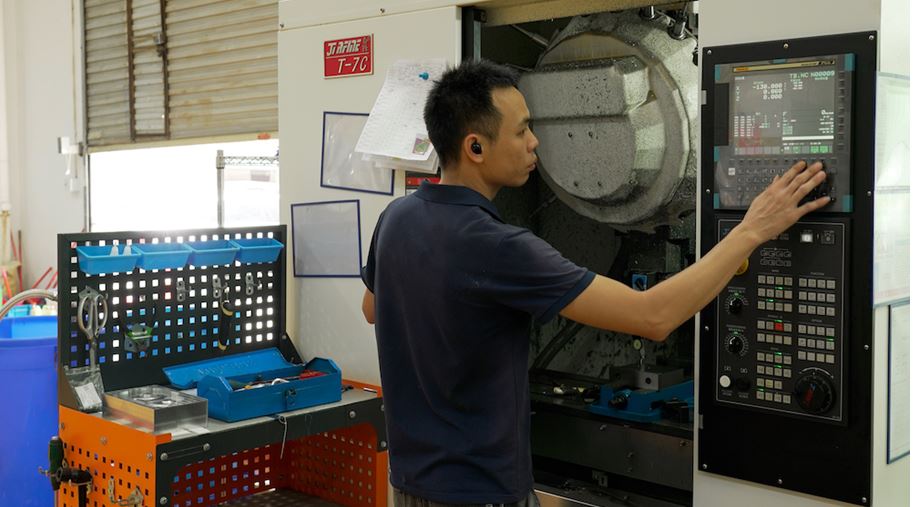
Artificial intelligence (AI) is reshaping the manufacturing industry through greater accuracy, speed, and reliability of CNC machining services. The AI-based systems keep track of Artificial Intelligence performance of tools in real time, identify anomalies, and anticipate possible failures before they noticeably interfere with the production process. This predictive tool enables lessening the downtime, maximizing the tool life, and enhancing efficiency.
AI accelerates the creation of complex workflows, conducts machining adaptively, and performs quality control in near-real-time, removing variations in results between prototypes in large production batches. These inventions assist producers remain profitable in sectors wherein speed-to-market and error-free top-grade matter, and AI assimilation is a primary force of recent, smart machining procedures.
This article discusses the power of AI to facilitate predictive maintenance, automate processes, manage resource provisions, and promote continuous innovation in production. These advances are making precision machining solutions reach new efficiencies and reliabilities.
Predictive Maintenance in CNC Machining
Reactive maintenance in machining was usually done on a regular schedule or responded to a breakdown. These caused poor methods of efficiency that resulted in resource wastages, inflated repair costs and unplanned stoppage of the production. This can now be achieved using predictive maintenance which is a product of artificial intelligence since machines can now monitor themselves in real-time.
Contemporary CNC machines also have spindle, cutting tool and motor spindle sensors. These sensors produce massive amounts of operating data, including vibration data, torque loads, and thermal trend data. The data is analyzed through AI to identify evidence of wear or malfunction. By responding before failure sets in, the manufacturers can minimize down time, maximize tool life and maximize energy efficiency. The resulting shift produces a more stable and cost-efficient workflow in contrast to traditional processes.
Predictive maintenance is a competitive advantage to industries whose representatives have rigid standards. Aerospace and car makers, among others needs parts with high levels of tolerances. The predictive model integration reduces interruptions and ensures the predictive models are consistent and reliable as the precision machining solutions.
Process Automation with AI Integration
AI transforms machining operations to automate the process. Prior to the operators manually changing cutting parameters due to wear or shift in temperature hardness or expansion of heat to the tools. These were manufacturing processes, and inaccurate. The use of AI-based structures has witnessed the use of machines that keep tabs on operating conditions and automatic adjustment of parameters.
This attribute enhances CNC machining services that possess a high level of consistency. The machines equipped with AI are multi-axis which are capable of adjusting the spindle speed, the feedback changing the feed rate, which makes it efficient in the situations with complex shapes and with the materials that are not easily machined. The resulting factor is stabilized production process wherein; there is minimal down time and production discontinuity. Throughput improvements are made by reduction of wastes through this automation.
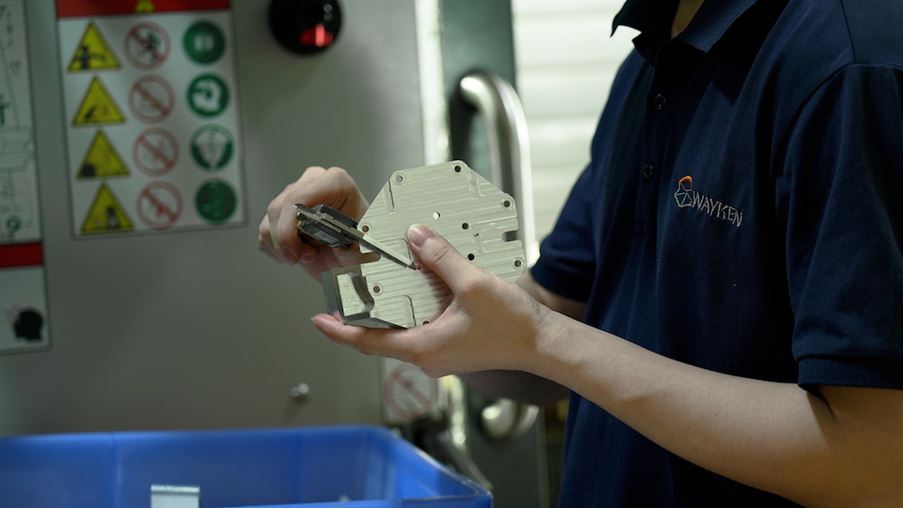
It turns out to be revolutionary in those industries where precision matters. Accuracy in large volumes is needed in inflexible and large volumes in health equipment, aircraft and electronic industries. Such demands can be serviced by the automation of processes based on AI, as it is fully reliable and can be easily scaled. It exploits the controllable nature the precision machining solutions fulfil; by ensuring it becomes more flexible, quicker and able to cope with the production increase with a higher volume without the loss of the precise results.
Resource Optimization and Energy Efficiency
Accuracy and speed are no longer sufficient criteria, though. It also dwells on efficient use of resources such as the necessity to harmonize cost benefit and ecology. AI powered analytics are significant because they monitor energy usage, wear and tear of the tools, and waste materials. Because the inefficiencies can always be predetermined, the manufacturers can become more productive and minimize the cost of their operations together with the carbon effect.
An apparent illustration is the utilization of the material. The cutting paths can also be examined using AI systems and modified to minimize scrap, which comes in handy when working with expensive alloys or composites. The expediency generated during the application of the concept towards CNC machining services is the wastage of the raw materials is preserved and quantifiable savings are realized, more notably when the scale of the business is immense. Cutting strategy optimization that guarantees the longevity of the tool life to reduce replacement and downtime is also done.
Energy efficiency is another great merit. AI has the power to regulate cooling, machine idle times and loads across equipment. The solutions can allow the factories to consume less energy without affecting performance. Based on this, only precision machining solutions can meet strict quality standards, which are also sustainable in the long term and profitable.
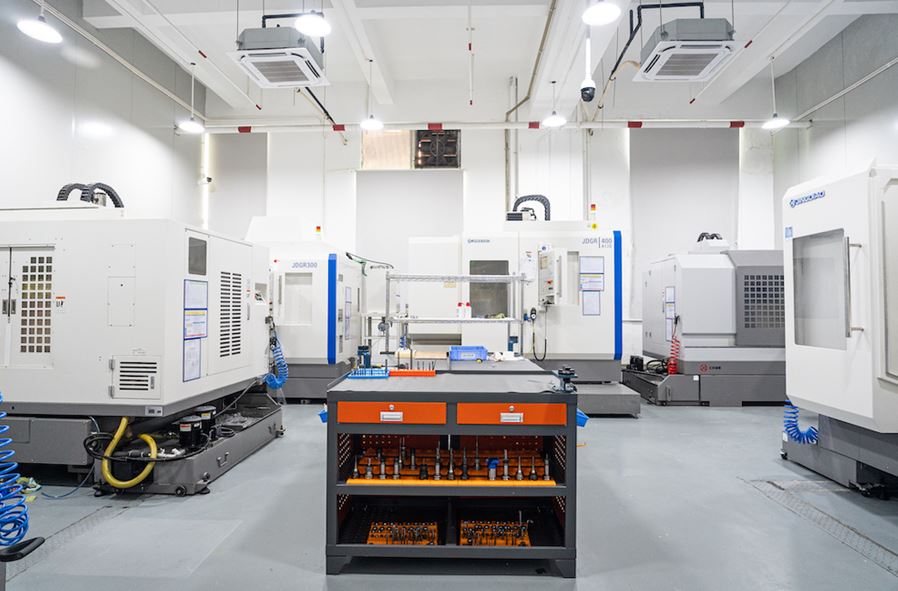
Continuous Learning and Quality Control
The capability to learn and enhance is considered to be one of the most powerful aspects of AI. Machine learning programs process statistically hundreds of production cycles at a time and determine trends that human operators may not identify. These insights are made to adjust viewpoints on reduction plans, tool design and sequence of processes.
This is a capability that helps to control quality. Intelligence-based vision systems monitor parts that are machined and analyzed against CADs. This immediate feedback will enable corrective actions throughout the process and not after the process is completed. In the CNC machining services, it guarantees the reduced number of rejected pieces and the quicker delivery of them to the customers.
Continuous learning ensures consistency over time in an industry that needs a precision machining solutions and helps to make more and more complex designs. AI effectively makes a co-lead innovation, which makes the production faster and more accurate.
Conclusion
The machining industry is becoming a smarter and efficient ecosystem because of AI. AI can be used everywhere in contemporary manufacturing processes, whether it be to avoid downtime through predictive maintenance, to add precision in processes through process automation, to optimize resources and control quality. As CNC machining services continue to gain additional abilities, backed by the latest precision machining solutions, manufacturers can supply to the increased worldwide demand as never before. AI Augmentation of machining will not be only the trend of technological development, but it is the basis of the new generation of production.
