
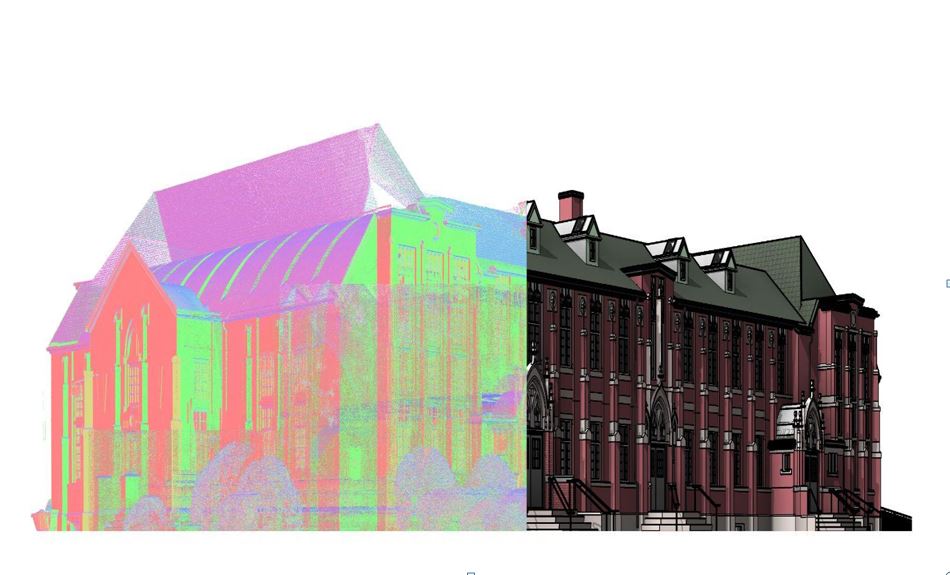
Just imagine a construction team has started working on a renovation project and soon discovered that the paper plans they are relying on do not match with real structure. Walls have moved, mechanical systems have been replaced, and dimensions are not accurate. These issues are enough to cause costly delays and rework. This scenario is very common in construction, where the original design drawings do not reflect the actual built conditions. Design changes happen more often during the construction process, due to site limitations, material alterations, or last-minute decision-making. The traditional 2D documentation process fails to manually capture these updates precisely.
The need for real-time updates and digitization introduces as-built modelling as the solution for all these challenges. As-Built Modeling, sometimes referred to as As-Built BIM or 3D Laser Scan to BIM, can help with producing an accurate digital three-dimensional model of a finished structure, capturing every aspect precisely as it is.
The main advantages of As-Built Modeling Services will be discussed in this blog, along with the reasons why they are now necessary for effective, economical, and successful construction project management.
Let’s Understand, What Are As-Built Models?
As-Built Models are comprehensive 3D digital representations of a final construction that authentically depict the actual condition of a constructed structure. As-Built Models demonstrate how a structure was really constructed, including all field updates and deviations made during the process, compared to design intent, which shows how the building was actually planned. Usually, laser scan data, redline drawings, or site survey processes are used to create these models, guaranteeing exact geometry and spatial accuracy. By recording each component, from MEP systems to structural elements, the reality capture process provides a trustworthy record for future use.
In order to ensure that projects are carried out successfully based on accurate, as-built information, architects, contractors, facility managers, and building owners all rely on As-Built Modeling Services in the USA. The as-built BIM helps them make well-informed decisions during renovations, maintenance, or expansions.
Why Accurate As-Built Documentation is Very Important
To avoid the risks of depending solely on outdated or inaccurate 2D drawings, accurate As-Built documentation is essential. Conventional as-built drawings often overlook on-site changes, which can result in misaligned layouts, poor coordination, and costly rework during maintenance or renovations. Inaccurate data delays projects, along with it raises safety concerns over the course of a building lifecycle. Having accurate, as-built building information has become crucial as the industry shifts to digital twins and data-driven facility management. As-Built Models offer a complete digital record that accurately represents what was built, serving as a trustworthy single source of truth. This guarantees more seamless handovers, improved future work planning, and more effective facility operations long after construction is finished.
For HOA boards, accurate building records can become especially important when construction defects create substantial repair costs and the possibility of additional owner assessments. In that situation, HOA special assessment construction defect consulting can help the association document the loss, coordinate the relevant experts, and evaluate recovery options before treating assessments as the only way to fund repairs.
Top 5 Benefits of As-Built Modeling Services for the AEC Professionals
Every stage of a building project, from design validation to long-term facility management, benefits from As-Built Modeling Services. They enable more efficient teamwork, lower risk, and better decision-making by giving teams an accurate digital record of the built environment.
The main advantages that make As-Built Modeling essential for modern building construction projects are listed below.
Improved Precision and Dependability
The level of precision that As-Built Modeling Services adds to project documentation is one of its main benefits. Real-world conditions, including any on-site variations from the original design, are captured by these models. This removes discrepancies between the intended design and the actual construction, resulting in zero rework or delays. Every wall, beam, pipe, and fixture is precisely placed where it should be due to As-Built BIM, which utilizes precise laser scan data or verified site information. This lays the groundwork for more effective and error-free project execution by giving access to trustworthy documentation to the architects, engineers, and owners, which they can rely on for future planning, analysis, or maintenance.
Reduced Cost Overruns and Rework
One of the most costly issues in construction is rework, which frequently arises from old or flawed plans. By providing a validated, up-to-date data of the built environment, As-Built Models aid in diminishing rework. Construction teams are no longer required to make assumptions about concealed conditions or perform repetitive field verifications. As-Built Modeling Services helps in reducing constructability issues and design disputes, which usually result in expensive change orders. Early detection of possible conflicts and disagreements allows project participants to resolve them before they become serious on-site issues. Significant time savings, less rework, and stricter budget control are the outcomes, enabling businesses to complete projects on time and within budget.
Better Facility Management and Project Handover
Client satisfaction depends on a flawless handover, which As-Built Modeling facilitates. By storing structural components, MEP systems, and equipment information in a single, central file, these models act as a digital record of the entire structure. Facility managers have instant access to accurate information about their assets rather than having to sift through piles of paper drawings. This enhances future renovations, space management, and building operations. Clients can effectively run and maintain the facility from day one if all systems and components are well documented. This saves time, lowers maintenance errors, and improves long-term operational efficiency.
Supports Renovations, Expansions, and Retrofits
Accurate As-Built Models are indispensable when dealing with renovation and expansion projects. They take out speculation by supplying design teams and contractors with a precise digital record of existing conditions. That level of accuracy allows them to determine structural reliability, plan new layouts, and avert the discovery of conflicts until the construction process is underway. Renovations and expansions can require both the elimination of, and addition to, existing systems, and verified 3D models can be a decision-allied with data documentation that can be architecturally valid. If reliable real-world data is available, designers and contractors can accurately anticipate a project plan, mitigate risk, and eliminate an on-site way of problem solving that shifts to design innovation.
Enhancing Collaboration and Transparency
As-Built Models advance collaboration by ensuring that all project participants, from engineers, architects, contractors, and owners, are working from the exact same dataset. With a collaborative digital model, communication is more explicit and decision-making is more transparent. This strategy reduces communication errors, increases collaboration and accountability. It also builds confidence and trust when clients can see the finished construction digitally and can verify that every element is in position as planned. The relationship benefits through increased collaboration and transparency, ultimately enhancing project delivery, bringing improved relationships and raising the bar on efficiencies and quality for construction management.
Integrating As-Built Models with Modern Construction Technologies
As-Built Models can fully integrate with advanced construction methods such as BIM, Digital Twins, and Facility Management Software to form a connected ecosystem to enable better decision-making. Utilizing laser scanning and reality capture technologies, As-Built Models assist in converting the built environment’s condition into precise digital environments for analysis, monitoring, and management in the real-time. This integration allows teams to connect design, construction, and operations data and bridge the gap between the physical and digital environment. As the industry is beginning to engage with automation of workflow and smart infrastructure, As Built Models initiate the technology and data needed for smart building operations, predictive maintenance programs, and sustainable asset management to ensure every building’s condition and data is accurate, actionable, and ready for the future.
Final Thoughts
In the modern data-centered construction environment, Scan to BIM Conversion Services for As-Built Modeling offers significant value long after the project is delivered. It provides an accurate, digital record of what was constructed and can help facilitate effective maintenance, inform decision-making, and help prepare building operations for future changes. Digital As-Built documentation is no longer an option; it is necessary to bring accuracy, transparency, and cost savings to the building’s ownership period. To do this, it is worthwhile to consider finding a qualified As-Built Modeling service in the USA with experience delivering accurate and high-quality project information for improved workflows and project outcomes.
Read also:
Sketchfab: Share and Embed 3D Models Anywhere Online
