
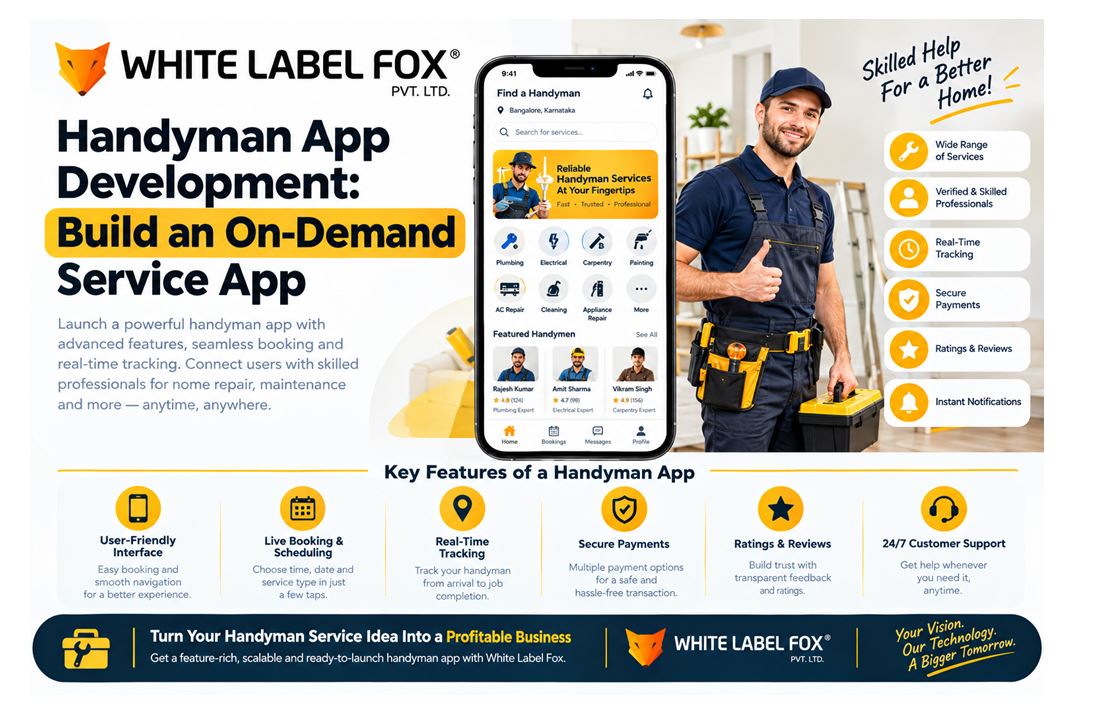
The demand for convenient home services is growing as customers increasingly prefer to book professionals through digital platforms. From plumbing and electrical repairs to cleaning, painting, appliance maintenance, and furniture assembly, people want a simple way to find trusted service providers and schedule jobs.
This shift creates a strong opportunity for startups, entrepreneurs, and established service businesses to enter the on-demand home-services market. Handyman App Development enables businesses to create a digital marketplace where customers can discover services, connect with professionals, schedule appointments, and manage bookings from one platform.
Instead of limiting a business to a single service category, an on-demand marketplace can support multiple services and locations. This allows entrepreneurs to start with a focused market and expand as customer demand and provider participation increase.
What Is a Handyman App?
A handyman app is a digital platform that connects customers with professionals offering home maintenance, repair, installation, and other household services. Customers can search for a service, view available professionals, choose a suitable time, make a booking, and communicate with the service provider through the platform.
For entrepreneurs, the app works as a marketplace that manages interactions between customers and service professionals. Depending on the business model, the platform can include independent professionals, local service companies, or specialized experts.
A modern On-Demand Handyman App can support services such as:
- Plumbing and electrical repairs
- Home and office cleaning
- Painting and carpentry
- Appliance repair and installation
- Furniture assembly
- Gardening and lawn maintenance
- HVAC and general maintenance
- Moving and packing assistance
- Home improvement services
This flexible model allows businesses to introduce new service categories as they identify additional opportunities in their target market.
Why Should Businesses Invest in Handyman App Development?
Customers increasingly value convenience, transparency, and quick access to reliable professionals. Traditional methods of finding a handyman often involve searching through directories, making multiple calls, or relying on personal recommendations.
A digital marketplace can simplify this process while giving businesses a structured way to manage customer demand and service providers.
Reach a Wider Customer Base
A mobile platform can help service businesses reach customers beyond their existing local network. Entrepreneurs can initially target one city or region and expand into additional markets once the business model is established.
Offer Multiple Services
A marketplace can bring different home services together in one application. Customers do not need separate platforms for different requirements, while businesses can increase their opportunities for bookings.
Build Repeat Customers
Home maintenance is often recurring. Customers may need regular cleaning, seasonal maintenance, appliance servicing, or repeated repair services. Features such as booking history, saved professionals, and recurring appointments can encourage repeat usage.
Improve Service Management
A centralized platform makes it easier to organize customer requests, professional availability, bookings, service categories, and reviews. This can provide businesses with greater visibility into marketplace operations.
Create New Business Opportunities
Entrepreneurs can develop specialized marketplaces around specific customer groups, locations, or service categories. For example, a platform could focus on residential services, commercial maintenance, property management, or premium home services.
Essential Features of a Successful Handyman App
The features of an on-demand service platform should support the complete customer and professional journey. A successful marketplace needs to make booking simple while providing service providers with practical tools for managing their work.
Customer Features
Customers should be able to find and book services without unnecessary complexity.
Important features can include:
- Easy registration and profile management
- Service category discovery
- Location-based service search
- Professional profiles
- Ratings and reviews
- Instant service booking
- Scheduled appointments
- Booking confirmation
- Service status updates
- In-app communication
- Notifications
- Secure payment options
- Booking history
- Cancellation and rescheduling
- Customer support
For urgent services, quick discovery is particularly important. A customer dealing with a leaking pipe or electrical problem may want to find an available professional immediately rather than wait for a traditional appointment process.
Professional Features
Service providers require tools that help them manage customer requests and daily schedules.
A professional dashboard can include:
- Registration and profile creation
- Service category management
- Availability settings
- Job request notifications
- Booking acceptance and rejection
- Customer communication
- Location and navigation support
- Appointment management
- Earnings history
- Completed job records
- Customer ratings
- Service-area management
These capabilities help professionals organize their schedules and respond to service requests more efficiently.
Admin Features
The business needs centralized tools for managing the marketplace and maintaining service quality.
Administrative capabilities can include:
- Customer management
- Professional management
- Provider verification
- Service category management
- Booking management
- Review monitoring
- Cancellation management
- Promotions
- Notifications
- Customer support
- Dispute management
- Marketplace analytics
These tools become increasingly important as the platform expands into multiple categories and geographical markets.
How Does a Handyman App Like Uber Work?
The growth of ride-hailing platforms has influenced many other on-demand industries. Entrepreneurs now use similar marketplace principles to connect customers with professionals. This is why the concept of a handyman app like Uber has become attractive to businesses entering the home-services industry.
Although the basic idea is similar to ride-hailing, home services require a different booking experience because each job can vary in complexity, duration, and skill requirements.
A typical booking process can work as follows:
Step 1: Customer Selects a Service
The customer opens the application, chooses the required service, and enters the service location.
Step 2: Professionals Are Matched
The platform identifies suitable service providers according to factors such as service category, location, availability, ratings, and business rules.
Step 3: Customer Selects a Booking Option
The customer can request immediate assistance or schedule a service for a preferred date and time.
Step 4: Professional Accepts the Request
The selected professional receives the job request and confirms the appointment.
Step 5: Service Is Completed
The professional visits the customer’s location and performs the requested service.
Step 6: Customer Completes the Booking
After the job is finished, the customer can complete the payment process, leave a review, and rate the professional.
This workflow provides the convenience associated with an Uber Like App For Handyman services while allowing businesses to customize the marketplace around their own operational model.
What Is an Uber for Handyman Business Model?
An uber for handyman model applies the convenience of on-demand booking to home services. Instead of customers contacting individual professionals, the marketplace provides a centralized platform for discovering, comparing, and booking service providers.
However, entrepreneurs should avoid simply copying a ride-hailing application. Home services have different customer expectations and business requirements.
For example, a plumbing emergency may require immediate assistance, while a painting project may require a scheduled visit and additional discussion before the work begins.
A flexible Uber for Handyman Services App can therefore support both immediate and scheduled bookings.
Useful capabilities include:
- Instant service requests
- Scheduled appointments
- Multiple service categories
- Professional verification
- Location-based matching
- Service availability
- Customer reviews
- Provider ratings
- Recurring bookings
- Service-area management
- Customer communication
This flexibility can help businesses serve both urgent and planned home-service requirements.
How to Choose the Right Handyman App Model
Before starting Handyman App Development, entrepreneurs should clearly define their target market and business model. The right approach will depend on the service categories, customer segment, geographical market, and growth strategy.
Single-Service Marketplace
A single-service platform focuses on one category, such as plumbing, electrical work, cleaning, or appliance repair. This approach can help startups establish a focused market position before expanding.
Multi-Service Marketplace
A multi-service platform like gojek brings several home services together. Customers can use one application for different requirements, while the business can expand its marketplace opportunities.
Local Marketplace
Businesses can begin within a particular city or region. Once sufficient customer demand and professional supply are established, the marketplace can expand into new locations.
Scheduled and On-Demand Marketplace
Combining immediate bookings with scheduled appointments allows businesses to support both emergency requirements and planned services.
How Can a Handyman App Stand Out in a Competitive Market?
Simply offering a list of service providers may not be enough to compete in a crowded marketplace. Businesses should identify specific customer problems and create a service experience around solving them.
An On-Demand Handyman Services App can differentiate itself through faster professional matching, reliable providers, convenient scheduling, transparent service information, and responsive customer support.
Businesses can also explore:
- Verified professionals
- Faster booking confirmation
- Recurring service options
- Personalized service recommendations
- Multiple service categories
- Location-based availability
- Better customer support
- Flexible scheduling
The strongest competitive advantage often comes from understanding the target market rather than adding unnecessary features.
Future Opportunities for On-Demand Handyman Platforms
The future of home services is likely to become increasingly digital and personalized. Entrepreneurs can expand beyond basic service bookings by introducing recurring maintenance programs, business accounts, property-management services, specialized professionals, and subscription-based service plans.
A marketplace can also use customer preferences, previous bookings, service requirements, and professional availability to improve service recommendations and matching.
This means Handyman App Development can become more than a booking platform. With the right business strategy, it can provide the foundation for a broader digital home-services marketplace.
Conclusion
The growing demand for convenient home services presents an opportunity for startups, entrepreneurs, and established businesses to build scalable digital marketplaces. A well-planned Handyman App Development strategy can connect customers with trusted professionals while simplifying bookings, service management, and marketplace expansion.
Whether a business wants to launch a specialized service marketplace or an Uber Like App For Handyman, the platform should be designed around customer needs, professional requirements, and long-term business goals.
Partnering with an experienced clone app development company can help entrepreneurs start with a proven marketplace concept and adapt it to their brand, service categories, target market, and expansion strategy. With the right foundation, an On-Demand Handyman App can become a scalable platform for serving the growing global home-services market.
Frequently Asked Questions
1. What is Handyman App Development?
Handyman App Development involves creating a digital platform that connects customers with professionals offering repair, maintenance, cleaning, installation, and other home services.
2. How does an Uber for handyman platform work?
An Uber for handyman platform allows customers to select a service, provide their location, discover suitable professionals, book a service, communicate with the provider, and complete the booking through the platform.
3. What services can be offered through a handyman app?
A handyman marketplace can support plumbing, electrical services, cleaning, painting, carpentry, appliance repair, furniture assembly, gardening, maintenance, and other home-service categories.
4. Can I launch an Uber-like app for handyman services?
Yes. An uber like app for handyman services can be customized for different service categories, locations, booking models, professional types, and business requirements.
5. Is a handyman clone app suitable for startups?
A handyman clone app can provide startups with a ready-made foundation for entering the on-demand home-services market. Businesses should choose a solution that supports customization, scalability, multiple service categories, and future expansion.
