
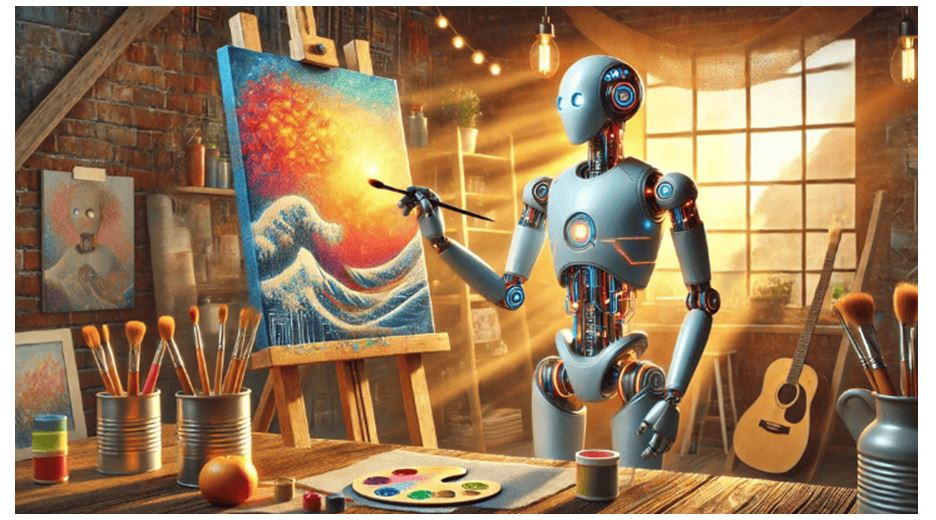
The way we create visual content is changing rapidly. Not long ago, producing a professional image or video often required expensive software, specialized technical skills, and hours of manual editing. Today, artificial intelligence is making many of these capabilities accessible directly from a web browser.
From generating images from simple text prompts to transforming existing videos with AI-powered effects, modern creative platforms are bringing together tools that previously required multiple applications. This shift is particularly useful for creators, marketers, designers, artists, and businesses that need to produce visual content quickly without building an entire professional production workflow.
Among the emerging solutions in this space are all-in-one AI platforms that combine image generation, video generation, editing, and creative effects in a single environment.
The Rise of All-in-One AI Creative Platforms
AI image and video generation has evolved significantly over the past few years. Early AI tools were often designed around a single function: generating an image, removing a background, or creating a short video from text.
While specialized tools can still be useful, creators increasingly need a more complete workflow. A typical project might start with generating an image, followed by editing the composition, applying an artistic effect, creating a video from the image, and then refining the final result.
Switching between several platforms for each step can make the process unnecessarily complicated.
An all-in-one AI creative platform attempts to solve this problem by bringing multiple capabilities together. Instead of treating image generation, video generation, editing, and effects as completely separate tasks, these functions can become different parts of the same creative workflow.
This approach can be especially valuable for people who create content frequently and want to spend more time experimenting with ideas rather than managing software.
AI Image and Video Generation From Scratch
One of the most useful applications of generative AI is the ability to create visual content from a simple description.
A creator can start with an idea in natural language and use an AI model to turn that idea into an original image or video. This makes visual experimentation considerably faster.
For example, a content creator preparing a social media campaign might need several different visual concepts. Instead of searching through stock libraries or commissioning custom artwork for every variation, AI can help generate multiple concepts based on different prompts.
The same workflow can be useful for:
- Social media content
- Blog illustrations
- Marketing campaigns
- Product concepts
- Presentation graphics
- YouTube and short-form video ideas
- Advertising creatives
- Storyboards
- Personal art projects
Video generation is particularly interesting because it can transform a static concept into something much more dynamic. Text-to-video and image-to-video models allow creators to explore movement, camera perspectives, scenes, and visual styles without traditional video production equipment.
For creators specifically interested in AI-powered video creation, an ai video generator can become part of the workflow for turning ideas into generated visual content.
Editing Becomes Part of the Creative Process
Generating an image or video is only one step in the creative process. In many cases, the first result is not the final result.
Creators may want to change the visual style, adjust details, remove unwanted elements, enhance quality, or experiment with an entirely different interpretation of the original concept.
This is where AI-powered editing tools become important.
Instead of manually adjusting every individual element, AI can assist with tasks such as retouching, enhancement, transformation, and restyling. The goal is not necessarily to replace traditional editing software, but to make common creative operations faster and more accessible.
For professionals, this can reduce repetitive work. For beginners, it can lower the technical barrier to producing polished visuals.
Consider a small business owner preparing a promotional campaign. They might already have product photographs but need several different versions for different platforms. AI editing tools can help transform the original assets into alternative compositions, styles, and formats without requiring the owner to become an expert in professional image-editing software.
AI Effects Add Another Layer of Creativity
Beyond generation and editing, AI-powered effects provide another way to experiment with visual content.
Effects can be used to dramatically change the appearance or mood of an image or video. A conventional photograph can become the starting point for an artistic interpretation, while an existing video can be transformed into something visually different.
This is particularly useful for creators who do not necessarily know exactly what they want at the beginning of a project.
Creative experimentation often works through iteration:
- Start with an initial concept.
- Generate or upload visual content.
- Apply an AI effect.
- Compare different variations.
- Refine the preferred result.
- Use the final asset in a larger project.
This process makes AI less about producing one perfect result and more about exploring a larger creative space.
Free Credits Make Experimentation Easier
One of the biggest challenges with AI generation is that users often want to experiment before committing to a paid service.
A platform that provides free credits to new users gives people an opportunity to understand how the tools work before deciding whether they fit their workflow. Daily free credits can also make occasional experimentation more accessible.
This matters because AI generation is highly dependent on individual preferences. Two users can enter similar prompts and have very different expectations regarding style, quality, speed, and creative control.
Being able to test the system can therefore be more useful than simply reading a list of technical specifications.
For students, hobbyists, independent creators, and people exploring AI for the first time, free access can provide a practical way to learn through experimentation.
Permanent Storage for AI-Generated Content
Another practical consideration is what happens after an image or video has been generated.
Creative projects can quickly produce large numbers of assets. If users need to manually download everything immediately or worry about short-term storage limitations, managing AI-generated content can become inconvenient.
Free, permanent, and unlimited storage addresses this part of the workflow by allowing users to keep their generated images and videos within the platform.
This can be useful when a creator wants to revisit an earlier project months later. An old image may become useful for a new campaign, while an earlier video concept might provide inspiration for another project.
Long-term storage also changes the platform from being simply a generation tool into something closer to a creative workspace.
Practical Use Cases for Creators
AI image and video platforms can support a wide range of creative projects.
Content Creation
Content creators often need a continuous supply of visual material. AI can help generate images, backgrounds, thumbnails, short videos, and other assets for different channels.
Instead of creating every asset from scratch manually, creators can use AI to accelerate the ideation and production process.
Marketing and Branding
Marketing teams frequently need multiple versions of the same visual concept.
A campaign might require different formats for websites, social media, advertisements, email campaigns, and other channels. AI generation and editing can help produce variations more efficiently.
For branding projects, AI can also be used during the early concept stage. Designers can quickly explore different visual directions before deciding which ideas deserve further development.
Design and Prototyping
Designers can use generative AI as a rapid prototyping tool.
Rather than spending hours developing an initial visual concept, they can generate several alternatives and use those results to communicate ideas with clients or teammates.
AI does not have to replace the designer. Instead, it can act as an additional creative instrument for exploring possibilities.
Personal Projects
AI tools are not limited to professional applications.
People can use them to create personalized artwork, experiment with photography, develop imaginative scenes, produce short videos, or simply explore new creative styles.
The relatively low technical barrier means that people who have never used professional creative software can participate in visual experimentation.
Who Can Benefit From These Tools?
Different types of users can approach AI creative platforms from very different perspectives.
Creators may value speed. When publishing frequently, producing an initial visual concept quickly can make a significant difference.
Professionals may value efficiency. AI-powered editing and transformation can reduce repetitive tasks and accelerate production workflows.
Artists may value experimentation. Generative models provide new ways to explore styles, compositions, and concepts that might be difficult to produce manually.
Entrepreneurs and small businesses may value accessibility. Instead of maintaining a large creative team for every project, they can use AI tools to create initial concepts and marketing assets more efficiently.
AI enthusiasts may simply enjoy experimenting with different models and discovering what is possible.
AI Is Changing the Creative Workflow, Not Just the Output
It is tempting to think of generative AI simply as a machine that produces finished images and videos. In practice, its larger impact may be on the creative workflow itself.
Traditional creative workflows often move in a relatively linear direction: plan, create, edit, review, and publish.
Generative AI introduces much more iteration.
A creator can generate an idea, modify it, create several alternatives, combine elements, transform the visual style, and generate a video from the result. Each step can produce new possibilities for the next step.
This makes experimentation cheaper and faster.
The most interesting result may not be the first image or video generated. It may be something discovered after several rounds of experimentation.
Choosing an AI Creative Platform
As the number of AI tools continues to grow, users should consider more than simply which platform has the newest model.
A practical platform should fit the user’s actual workflow.
Important factors can include the range of available generation capabilities, editing functionality, creative effects, storage, accessibility, and the ability to experiment without a significant upfront commitment.
Having multiple capabilities available in one place can also reduce the friction of moving assets between different applications.
For frequent creators, workflow simplicity can become just as important as model quality.
The Future of AI-Powered Visual Creation
AI-generated images and videos are still developing rapidly. New models continue to improve visual quality, motion, prompt understanding, consistency, and creative control.
At the same time, the boundaries between generation and editing are becoming less distinct.
Instead of thinking about an AI image generator, AI video generator, or AI editor as completely separate categories, future creative platforms may treat them as interconnected parts of a single workflow.
A creator could begin with a written idea, generate an image, modify it through natural-language instructions, turn it into a video, apply effects, and continue refining the result—all within one creative environment.
This could make sophisticated visual production increasingly accessible to individuals and small teams.
Final Thoughts
AI is changing how people approach visual creativity. The most significant advantage is not simply that machines can now generate images and videos. It is that creators can experiment with ideas faster, explore more alternatives, and complete visual projects with fewer technical barriers.
An all-in-one platform that combines image and video generation, AI-powered editing, creative effects, free credits, and permanent storage can make this workflow more convenient for a broad range of users.
For creators, marketers, professionals, artists, and anyone interested in exploring generative AI, these tools provide a new way to move from an idea to a finished visual experience.
As AI models continue to evolve, the creative process will likely become increasingly iterative, accessible, and collaborative—giving more people the ability to turn their ideas into compelling images and videos.
